Background
The programme contributes to the development of an African-led AI and climate-modelling community working closely with NMHSs, RCCs, universities, research institutions, relevant sectors and the global AI and climate community.
Overall purpose
To strengthen Africa’s capacity to apply artificial intelligence in weather and climate modelling in order to improve climate information services, early warning and disaster risk reduction.
Objectives
The Summer School will help participants understand, evaluate and apply AI and machine-learning approaches in African weather and climate-service contexts.
Understand
Introduce the concepts and principles of artificial intelligence and machine learning for weather and climate modelling.
Connect
Explain how AI can complement numerical prediction systems, climate models, observations and expert forecasting.
Explore
Examine practical applications in forecasting, bias correction, downscaling, nowcasting and extreme-event monitoring.
Apply
Provide hands-on experience with AI and machine-learning workflows using African weather and climate datasets.
Evaluate
Build participants’ ability to assess model accuracy, bias, uncertainty, limitations and operational suitability.
Collaborate
Promote sustained collaboration among NMHSs, RCCs, universities, researchers and relevant climate-service sectors.
Eligibility
This programme is designed for early- to mid-career professionals working at the intersection of climate science and data. We welcome applicants from National Meteorological and Hydrological Services (NMHSs), universities, and research institutions across Africa who are ready to apply machine learning methods to real climate and weather challenges.
- Affiliation with an NMHS, RCC, university, school, research institution or climate-related technical agency.
- Background in meteorology, climatology, hydrology, computer science, data science, geography or a related field.
- Basic knowledge of Python, or willingness to complete a pre-course Python module
- Demonstrated interest in AI applications for weather, climate or early-warning services.
- Institutional support or a clear plan for applying the training after the Summer School.
- Commitment to participate in all sessions, practical exercises and group project activities.
Trainers

Dr. Ousmane Ndiaye
Director General ACMAD Lead FacilitatorOver 26 years of experience, Dr Ndiaye is a champion in delivering climate services, he won the African prize of best national meteorological services in 2023. Before joining ACMAD, Dr. Ndiaye served as the Director of Senegal’s Meteorological Services at ANACIM, where he spearheaded several innovative projects, including a major partnership with NOAA to develop heatwave modeling systems. This initiative significantly enhanced early warning systems for heatwaves in Senegal, improving the resilience of communities to climate impacts.

Dr. Mouhamadou Bamba Sylla
AIMS Network Research Chair in Climate Change Science AIMS Kigali Facilitator View bio
Dr. Mouhamadou Bamba Sylla
AIMS Network Research Chair in Climate Change Science AIMS Kigali FacilitatorDr. Mouhamadou Bamba Sylla is the AIMS Network Research Chair in Climate Change Science based at the African Institute for Mathematical Sciences, Research and Innovation center (AIMS-RIC) in Kigali, Rwanda, where he leads a group of researchers, postdoctoral fellows, doctoral students, and master’s students. Previously, he was the Director of Research and Senior Scientist in Climate Modeling and Climate Change at the WASCAL Competence Center in Ouagadougou, Burkina Faso. At the same institution, he was also appointed as the Head of Climate Change and Climate Variability Research Cluster and Acting Coordinator of Observation Networks at different periods. He has completed a postdoctoral fellowship at the International Centre for Theoretical Physics (ICTP) in Trieste, Italy, and was a researcher and lecturer at Loyola Marymount University | Los Angeles (LMU|LA), California, USA. His research interests are climate change and impacts, climate modeling, scenarios and uncertainties, climate hazards and risks, climate information for adaptation and DRR, climate services, climate policy, AI/ML for climate science among others. With over 15 years of post-PhD experience, he has authored/co-authored more than 100 publications in international journals and books on climate science (see my Google Scholar:
, taught various courses related to climate change and climate modeling at various universities (Africa and the United States), and contributed to numerous training courses, workshops, and conferences worldwide.

Dr. Redouane Lguensat
Machine Learning & Climate Scientist Institut Pierre-Simon Laplace Instructor View bio
Dr. Redouane Lguensat
Machine Learning & Climate Scientist Institut Pierre-Simon Laplace InstructorDr. Redouane Lguensat is a senior climate data scientist at the Institut Pierre-Simon Laplace (IPSL) Climate Modeling Center, Sorbonne University, Paris, France. His work focuses on the application of machine learning to numerical climate modeling, model tuning, statistical downscaling, and bias correction. He holds a PhD in Computer Vision from IMT Atlantique and previously held a Make Our Planet Great Again (MOPGA) postdoctoral fellowship. Redouane is strongly engaged in applying machine-learning-based climate tools to challenges relevant to the Global South, particularly in North and West Africa, with a focus on machine learning capacity building and improved access to climate information.

Prof. Rendani Mbuvha
AI & Climate Researcher AfriClimate AI InstructorI am currently Associate Professor in Actuarial Science in the Mathematics Department at the University of Manchester. My research centers around applications of machine learning in climate risk management. I am a Co-Founder of AfriClimate AI a grassroots research community dedicated to harnessing the power of Artificial Intelligence for a sustainable, prosperous and climate-resilient Africa.
I was previously the Google DeepMind Academic Fellow in Machine Learning in the School of Electrical Engineering and Computer Science at the Queen Mary University of London and an Associate Professor in Actuarial Science at the University of Witwatersrand.
I completed my PhD at the University of Johannesburg under the supervision of Professor Tshilidzi Marwala and Dr Ilyes Boulkaibet concentrating on Shadow Hamiltonian Monte Carlo Methods within Bayesian Neural Networks. I was a recipient of the 2019 Google Africa PhD fellowship, which supported my PhD work. I am the author of the book Hamiltonian Monte Carlo Methods in Machine Learning.
I am a qualified actuary holding fellowships of Institute and Faculty of Actuaries and the Actuarial Society of South Africa.

Prof. Pedram Hassanzadeh
Climate Dynamics & AI Scientist AI for Climate (AICE) InstructorI am an associate professor at the University of Chicago’s Department of Geophysical Sciences, Committee of Computational and Applied Mathematics, Committee on Data Science (https://codas.uchicago.edu/people/faculty/), and Data Science Institute. received my Ph.D. (geophysical turbulence) and M.A. (applied mathematics) from UC Berkeley in 2013 and was a Ziff Environmental Fellow at the Harvard University Center for the Environment and Department of Earth and Planetary Sciences from 2013 to 2016. I received a CAREER Award from NSF in 2021 and a Young Investigator Award from the Office of Naval Research in 2020.
I lead the Climate Extremes Theory and Data (CeTD) group focused on integrating theory, simulations, observations, and machine learning techniques to understand the dynamics and future changes of extreme weather events in a changing climate. I also lead the AI for Climate (AICE) Initiative, a joint program of the Data Science Institute and Institute for Climate and Sustainable Growth (ICSG), which is focused on inter-disciplinary integration of AI with fundamental domain knowledge to accelerate and transform climate research with a focus on both scientific advances and societal impacts. With Michael Kremer and Amir Jina, I co-direct ICSG’s Human-centered Weather Forecasts (HCF) Initiative, which leverages the power of AI to innovate, benchmark, and democratize weather forecasts that can target what citizens on the ground need to know.

Dr. Nishadh Kalladath
Data Science and Machine Learning NORCAP expert in ICPAC InstructorNishadh is a NORCAP expert in Data Science and Machine Learning at the IGAD Climate Prediction and Applications Center (ICPAC) in Nairobi, Kenya. He is actively involved in research and development of impact-based forecasting (IBF) systems for the East African region. Currently, Nishadh is working on a CRAF’d-funded project within the Disaster Risk Management Programme at ICPAC, aiming to operationalize impact-based forecasting through hazard and impact modeling using the storylines approach and leveraging Bayesian networks.His work focuses on enhancing climate resilience and preparedness against weather-related disasters across East Africa. Nishadh holds a PhD in Environmental Sciences from Bharathiar University in Tamil Nadu, India. His doctoral thesis, titled “Particulate Air Pollution Data for Coimbatore, India: Real-Time Monitoring and Modeling with Data-Interoperability Measures,” emphasized the critical need for open, standardized real-time data for effective pollution monitoring, weather forecasting, and air quality risk management.

Dr. Wessel Bruinsma
Machine Learning Research Lead University of Cambridge InstructorMy name is Wessel. I am currently a Research Lead for the Machine Learning Group at the University of Cambridge. Our team’s goal is to advance environmental forecasting with end-to-end machine learning. I am also a Quantative Researcher for Cedalion Capital. Previously, I was a Research Lead for the The Alan Turing Institute and a Senior Researcher on the AI for Science initiative at Microsoft Research Amsterdam. We developed the Aurora model and open sourced the model too.
I hold a PhD in Machine from the University of Cambridge, supervised by Dr Richard Turner, an MPhil in Machine Learning and Machine Intelligence from the University of Cambridge, and a BSc in Electrical Engineering from the University of Delft. My curriculum vitae can be found here.
My research interests include machine learning for environmental science and forecasting, probabilistic modelling with a focus on time series, Bayesian nonparametrics with a focus on Gaussian processes, approximate inference, probabilistic programming, probability theory, and real analysis.

Dr Shruti Nath
Postdoctoral Research Assistant University of Oxford InstructorMy research focusses on developing lightweight statistical tools to model complex weather and climate processes. I work a lot with understanding the spatio-temporal regularities within noisy weather structures so as to be able to approximate them in a realistic/consistent manner. This allows better understanding of the uncertainty space, and more importantly, agile exploration of it. I employ a range of techniques for this, going from traditional statistical techniques to more recent artificial intelligence techniques.
I also dabble around with cloud-optimised artificial intelligence based training on large datasets (while trying to not use up too many credits), and multi-resolutional image analysis and decomposition. My previous work was at an NGO, and I try to maintain a strong lens on stakeholder engagement and capacity building within my work.

Dr. David John Gagne
Machine Learning Scientist National Center for Atmospheric Research (NCAR) Instructor View bio
Dr. David John Gagne
Machine Learning Scientist National Center for Atmospheric Research (NCAR) InstructorDr. David John Gagne II is a Machine Learning Scientist II and head of the Machine Integration and Learning for Earth Systems (MILES) group at the NSF National Center for Atmospheric Research (NCAR) in Boulder, Colorado. He has led the development of machine learning systems that enhance understanding and prediction of high impact weather and critical Earth system processes. He received his Ph.D. in meteorology from the University of Oklahoma in 2016 and completed an NCAR ASP Postdoctoral Fellowship before assuming his current role. He is a NSF AI2ES AI Institute leader and a NSF LEAP Science and Technology Center member. He is a WMO Nowcasting and Mesoscale Research Working Group member, chaired the American Meteorological Society Artificial Intelligence Committee, and serves as an editor for the AI for the Earth Systems journal, and has led summer schools, short courses, and hackathons.


Dr. Dwaipayan Chatterjee
Troposphere Research Institute of Meteorology and Climate Research Instructor View bio
Dr. Dwaipayan Chatterjee
Troposphere Research Institute of Meteorology and Climate Research InstructorI work at the intersection of artificial intelligence and Earth system science, exploring a range of dynamical and predictability questions at the interfaces of observations, numerical, and statistical models. I also serve as Scientific Coordinator for the ECMWF Machine Learning Training Program under the DestinE initiative, contributing to international efforts in AI-driven Earth system modeling.
My research focuses on developing physically consistent and interpretable AI models to better understand atmospheric processes across scales. In particular, I work on representation learning and generative modeling using satellite observations and km-scale numerical simulations. More broadly, my goal is to bridge the gap between predictive skill and scientific understanding, enabling trustworthy AI for weather forecasting and climate-scale applications.

Prof. David Hogg
Professor of Artificial Intelligence University of Leeds InstructorDavid Hogg is Professor of Artificial Intelligence at the University of Leeds. He is internationally recognized for his work on computer vision, particularly in the areas of video analysis and activity recognition. He works extensively across disciplinary boundaries, applying AI in engineering design, biology, medicine and environmental sciences. He has been a visiting professor at the MIT Media Lab, Pro-Vice-Chancellor for Research and Innovation at the University of Leeds (2011-2016), Chair of the ICT Strategic Advisory Team at the Engineering and Physical Sciences Research Council (EPSRC) in the UK, Chair of an international review panel for Robotics and Artificial Intelligence commissioned by EPSRC (2017), a Turing Fellow, and Co-Director of the National Pathology Imaging Co-operative. Until 2018, he was Chair of the Academic Advisory Group of the Worldwide Universities Network (WUN), helping to promote collaborative research between over 20 prominent research-intensive universities from around the globe. He is Director of the UKRI Centre for Doctoral Training in AI for Medical Diagnosis and Care. David is a Fellow of the European Association for Artificial Intelligence (EurAI), a Distinguished Fellow of the British Machine Vision Association, and a Fellow of the International Association for Pattern Recognition.

Prof. Rich Turner
Professor of Machine Learning University of Cambridge InstructorI’m Rich Turner, Professor of Machine Learning in the Machine Learning Group at the University of Cambridge.
I am the Cambridge Lead for the EPSRC Probabilistic AI Hub, Lead of the Cumulus AI Weather Forecasting Project, and Cambridge lead of the DVPS Foundation Models For Future AI Initiative.
My previous roles include Research Lead, AI for Weather Prediction, at the Alan Turing Institute, Visiting Researcher at Microsoft Research in the AI4Science and AI teams, Co-Director of the UKRI Centre for Doctoral Training in the Application of Artificial Intelligence to the study of Environmental Risks (AI4ER CDT), and Course Director of the Machine Learning and Machine Intelligence MPhil programme. I have received over £35 million of funding as a Principal or Co-Investigator. I’ve been awarded the Cambridge Students’ Union Teaching Award for Lecturing. My research has featured in the Times, Guardian, New York Times, Washington Post, and on the BBC.

Dr. Ehsan Bhuiyan
AI/ML Expert in Hydrology National Oceanic and Atmospheric Administration Instructor View bio
Dr. Ehsan Bhuiyan
AI/ML Expert in Hydrology National Oceanic and Atmospheric Administration Instructor"Dr. Md. Abul Ehsan Bhuiyan received his Ph.D. in Civil and Environmental Engineering from the University of Connecticut. He currently serves as an AI/ML expert in Hydrology at the International Desk, Climate Prediction Center (CPC), NOAA. His research focuses on applying artificial intelligence and machine learning to weather forecasting, climate prediction, remote sensing, and hydrological modeling. His current work includes developing AI-based operational forecasting systems for floods, extreme precipitation, and heatwaves by integrating satellite observations, reanalysis data, and numerical weather prediction models. His research aims to advance early warning systems and improve decision-making for weather, climate, and water resources management."

Dr. Mariana Clare
Machine Learning for weather forecasting ECMWF Instructor
Dr. Mariana Clare
Machine Learning for weather forecasting ECMWF InstructorDr. Mariana Clare is a researcher at the European Centre for Medium-Range Weather Forecasts (ECMWF), working on machine learning for weather forecasting. She contributes to the development of Anemoi and the Artificial Intelligence Forecasting System (AIFS), including the training of models for operational forecasting. Her recent work includes the development of an hourly machine learning–based forecasting model. Her research interests include quantifying and representing uncertainty in data-driven forecasts, as well as ensuring physical consistency in machine learning models and building methods that can be trusted for operational weather prediction.
She received a PhD from Imperial College London, focusing on the development of advanced numerical and statistical techniques to quantify uncertainty in coastal ocean models. By training, she is a mathematician, having completed her undergraduate degree in Mathematics at the University of Oxford.

Dr. Sara Hahner
Machine Learning for Weather Forecasting and Earth System Modelling ECMWF Instructor
Dr. Sara Hahner
Machine Learning for Weather Forecasting and Earth System Modelling ECMWF InstructorDr. Sara Hahner works on machine learning for weather forecasting and Earth system modelling at ECMWF. Her work contributes to the development of ECMWF’s Artificial Intelligence Forecasting System (AIFS), with a particular focus on extending data-driven forecasting to components such as ocean wind waves and the surface ocean. She also works with the Anemoi framework for developing and training machine learning models for weather and Earth system prediction.
She has a background in applied mathematics and machine learning and received her PhD in Mathematics from the University of Bonn in Germany. Before joining ECMWF, her research included representation learning for 3D surface meshes. She enjoys international scientific exchange and spent part of her academic studies in Chile and France.

Dr. Patrick Kinyua
AI and Impact-Based Forecasting Expert ACMAD/NORCAP FacilitatorModule: Machine Learning and AI
Dr. Patrick Kinyua is an AI and data science expert currently leading Artificial Intelligence and Impact-Based Forecasting initiatives at the African Centre of Meteorological Applications for Development (ACMAD). He has over 15 years of experience applying machine learning, predictive analytics, and responsible AI to climate services, early warning, agriculture and in humanitarian settings. His work focuses on developing AI-enabled forecasting systems, strengthening institutional capacity, and supporting anticipatory action for vulnerable communities across Africa.
From the Event Gallery
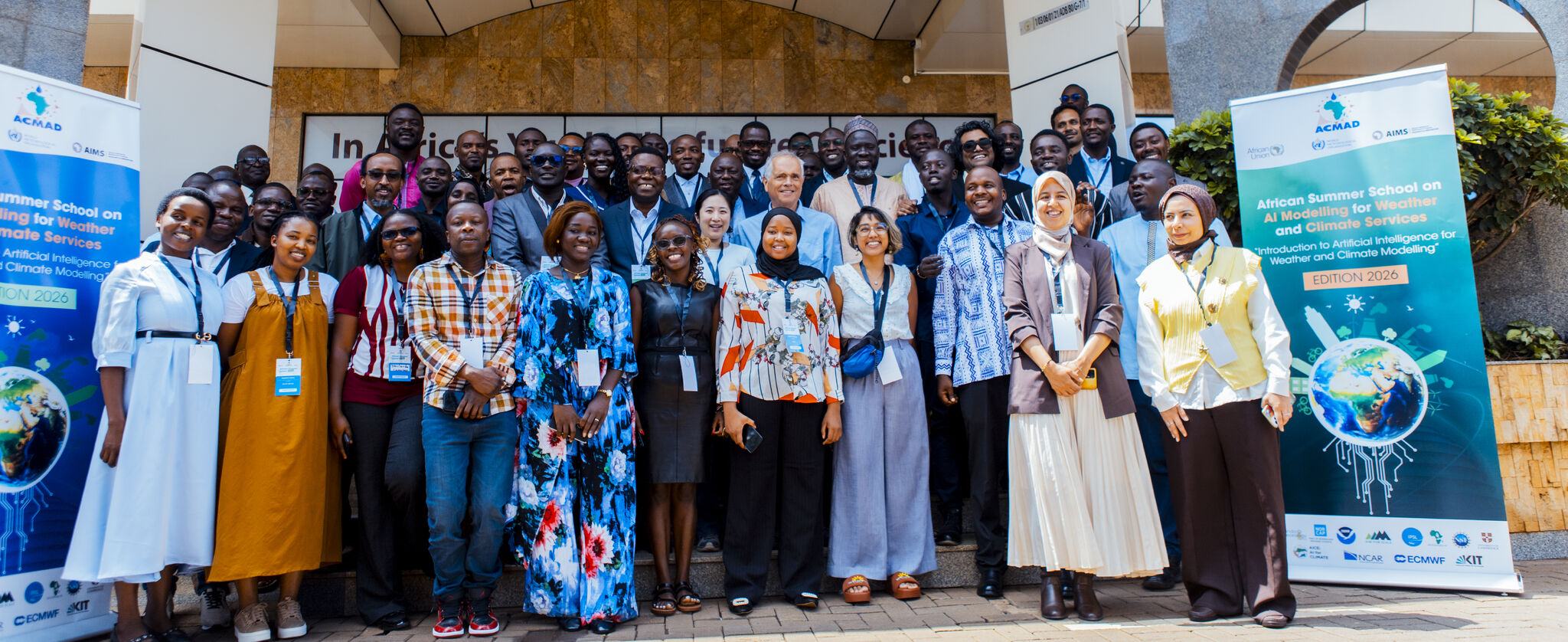
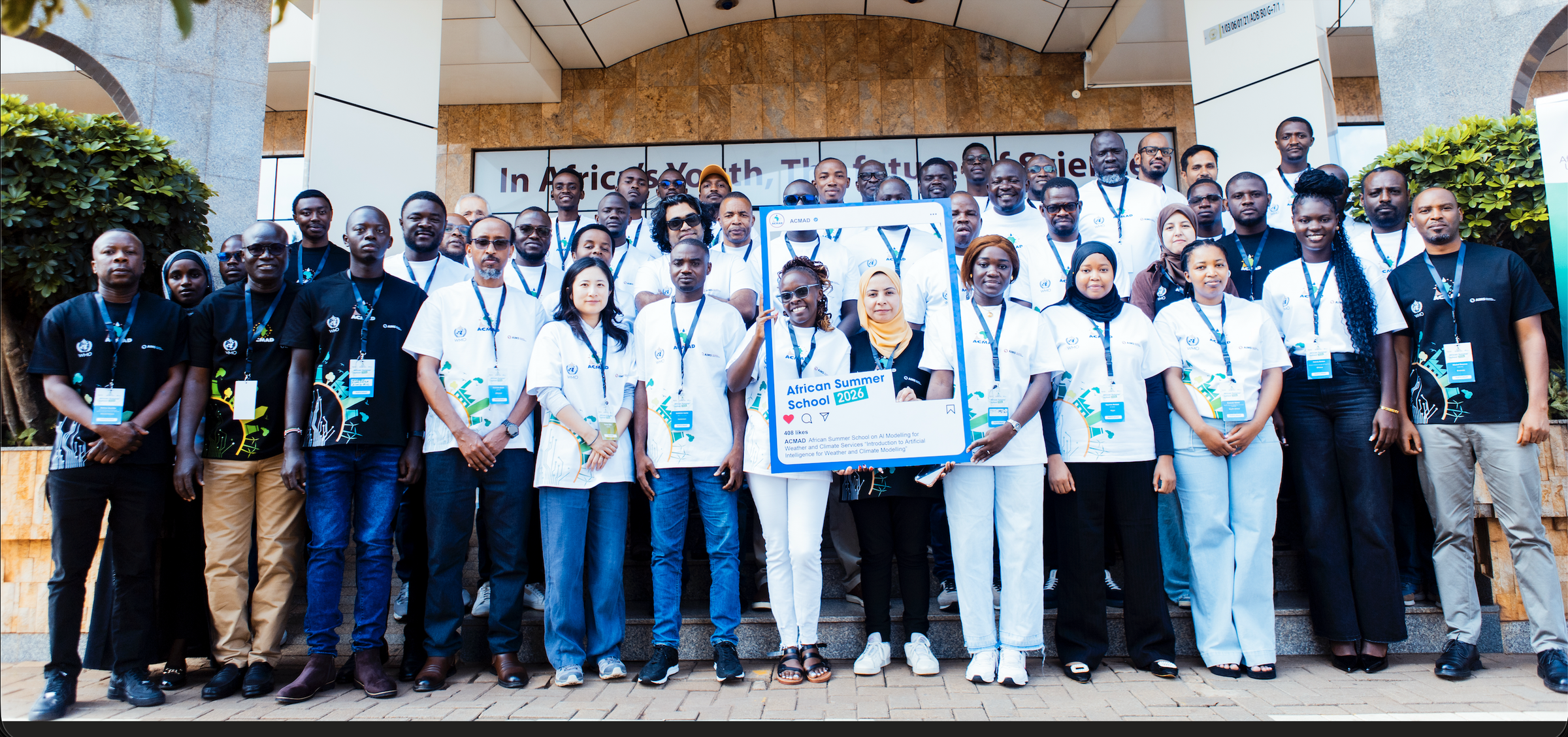
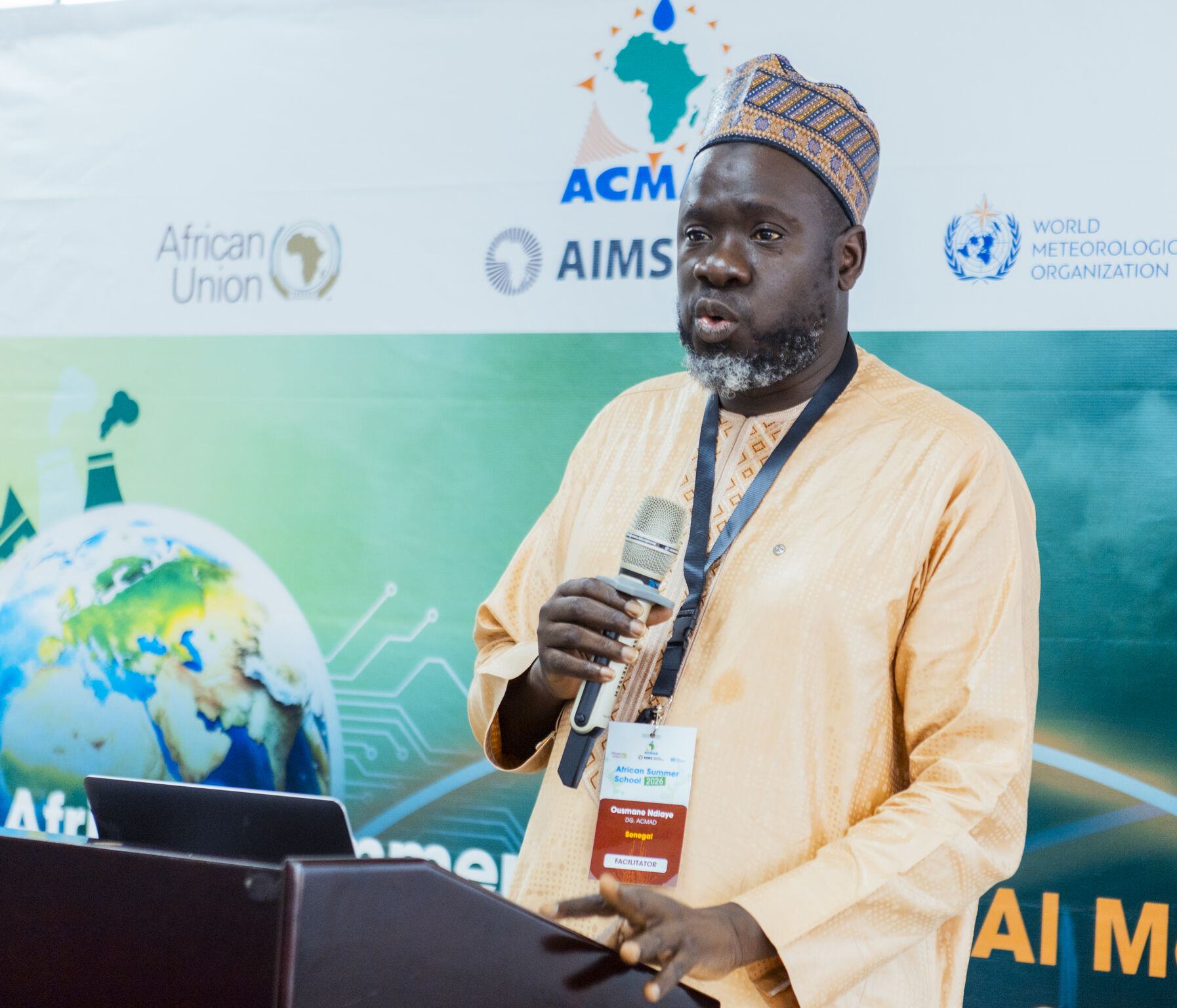
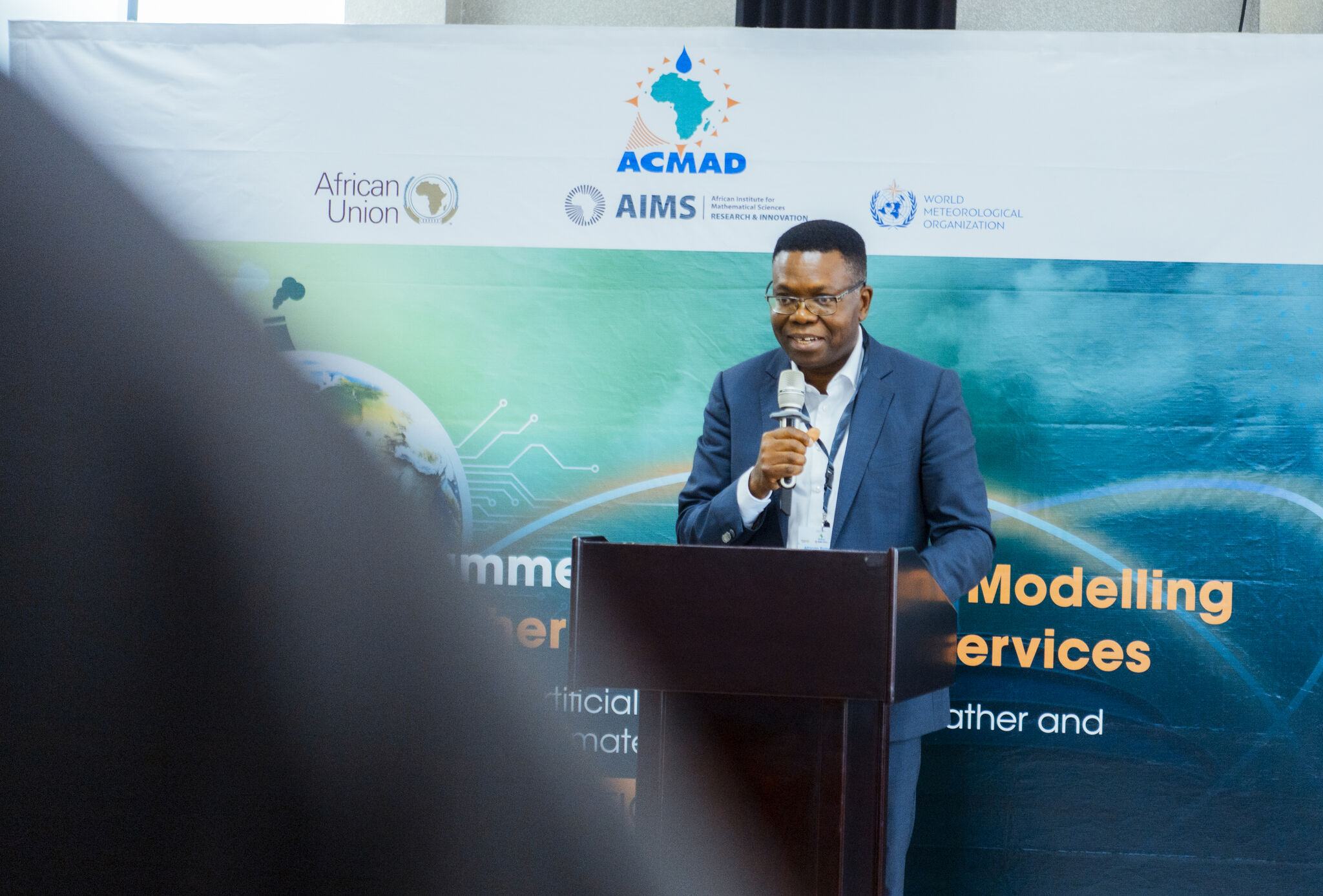
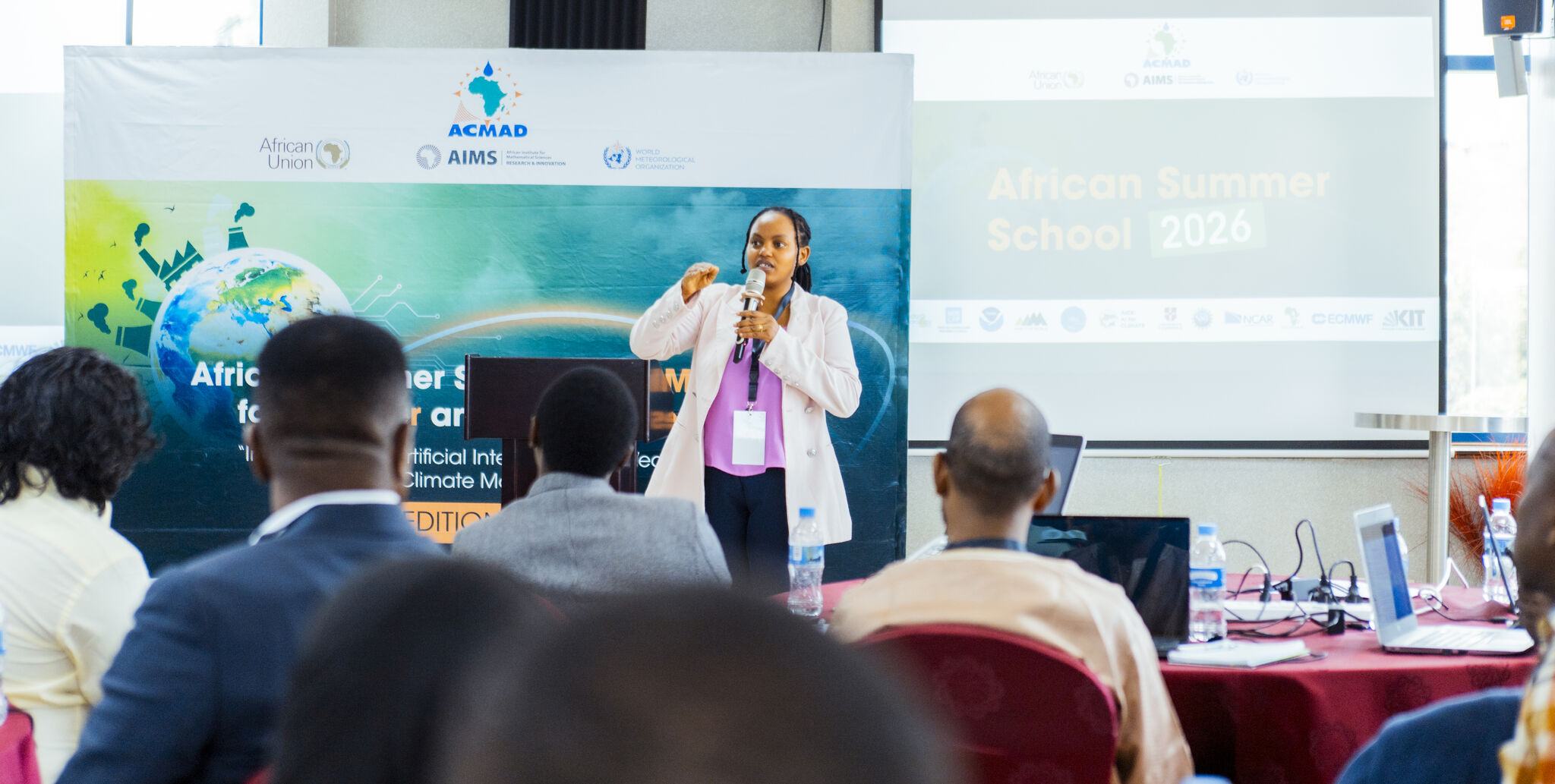
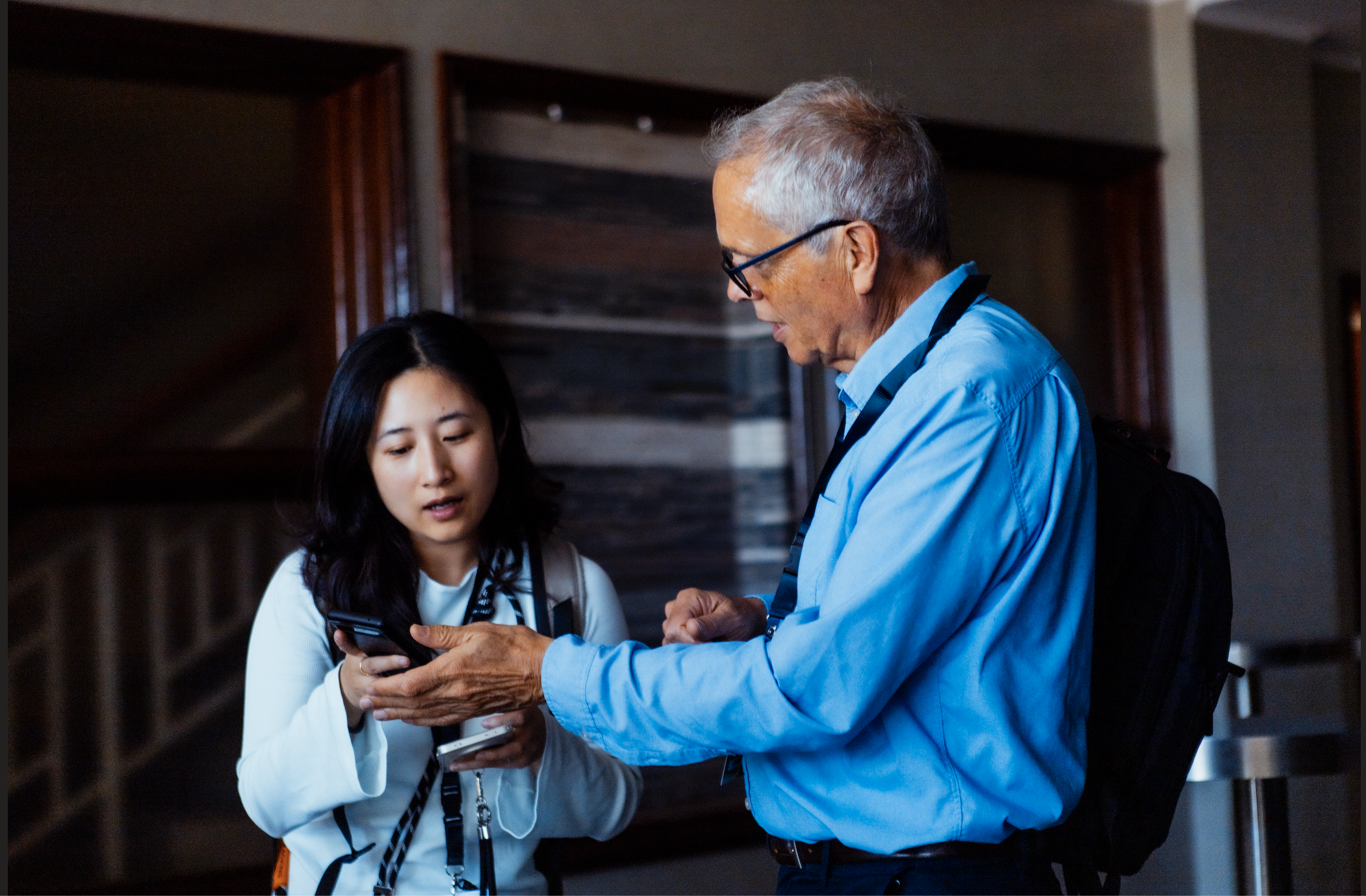
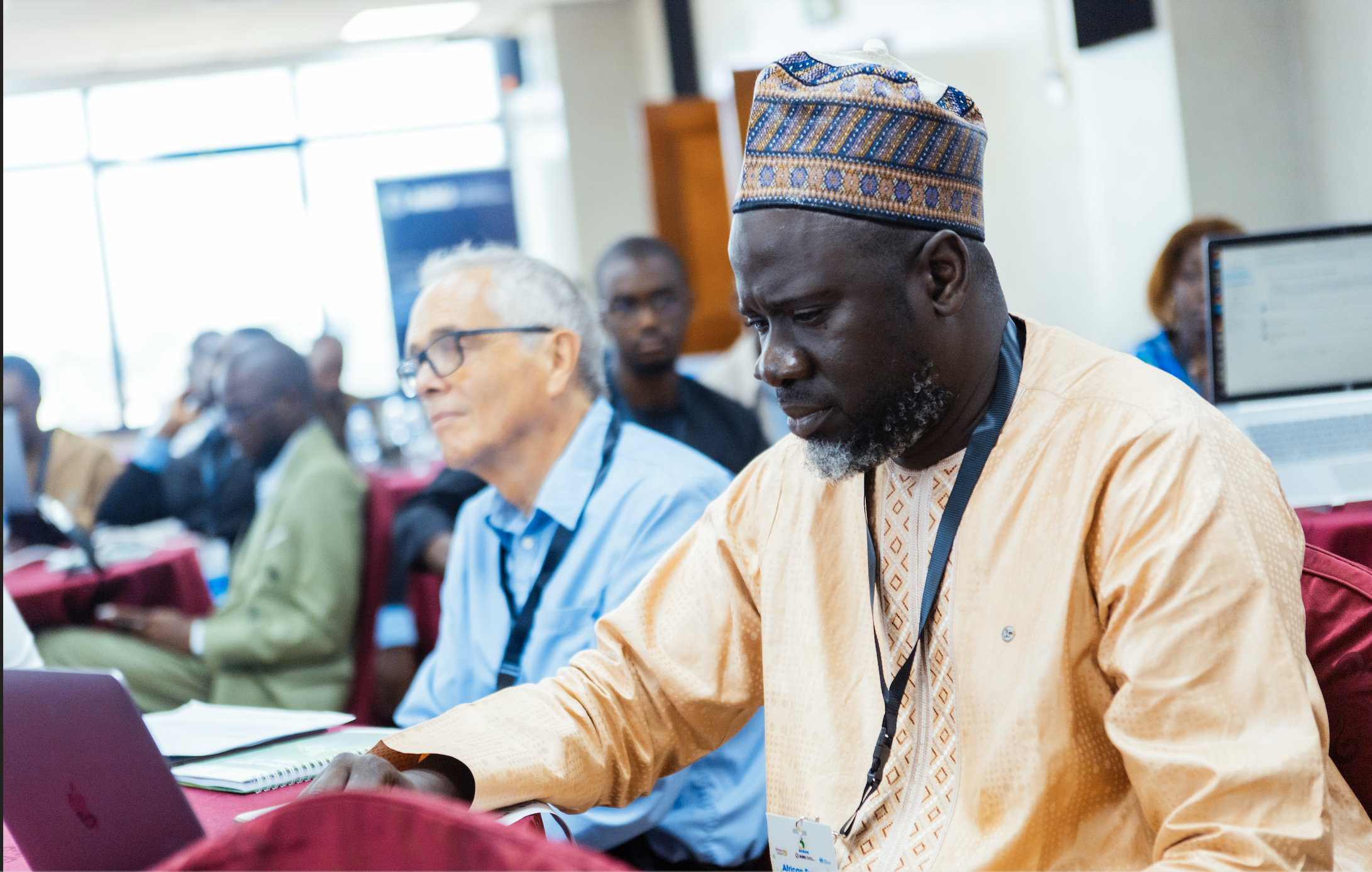
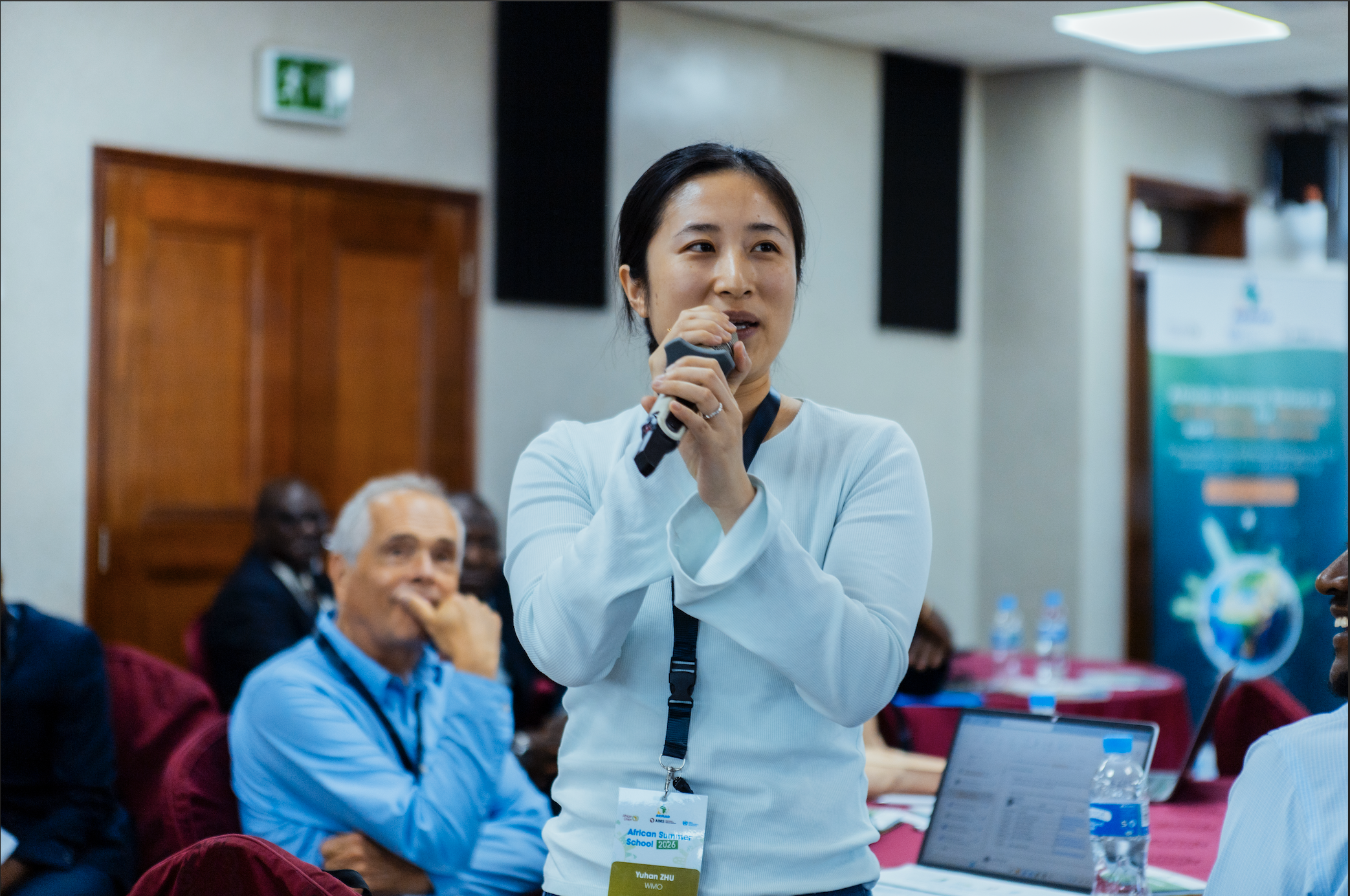
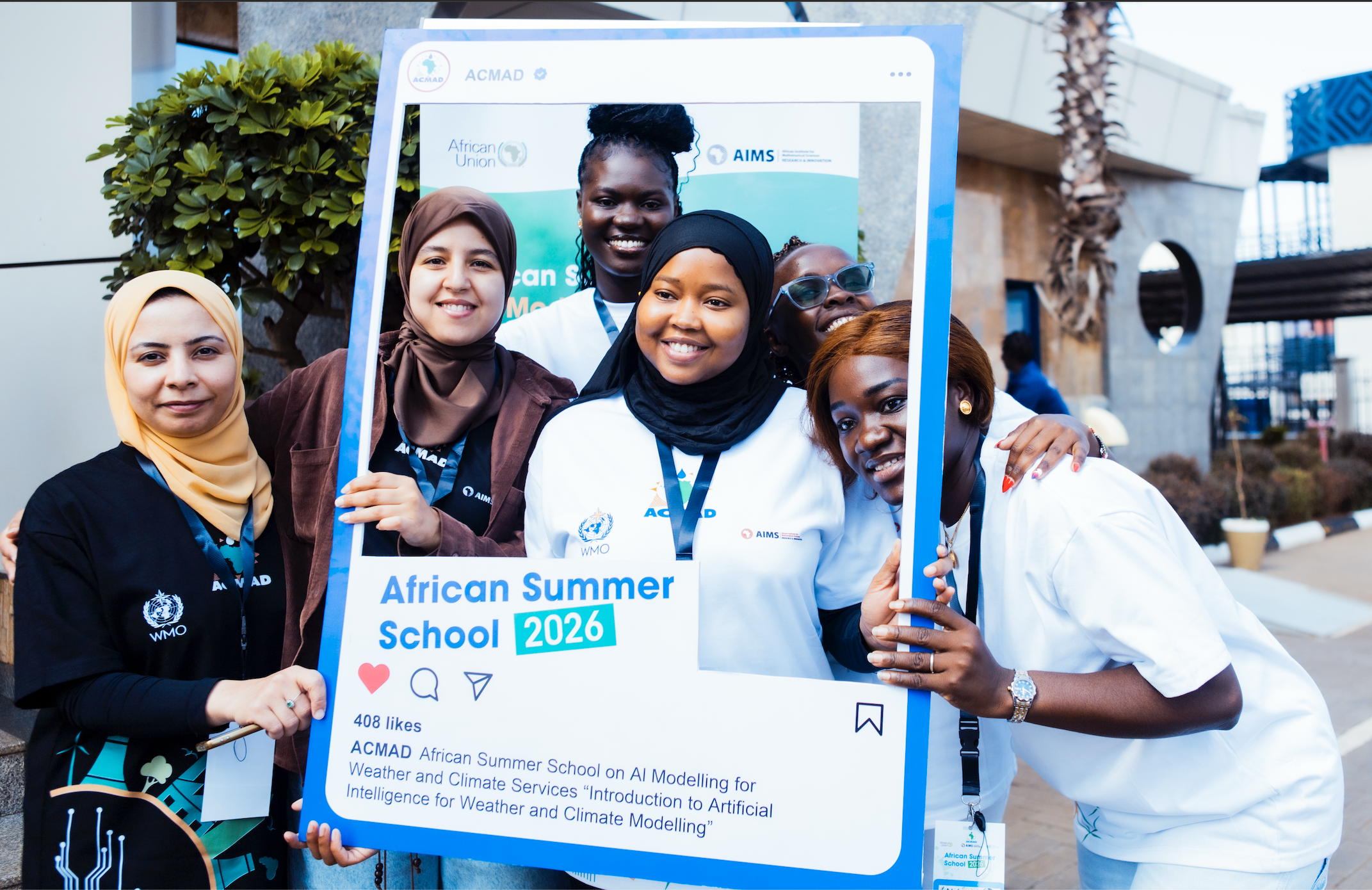
Concept Note 2026

The concept note outlines the objectives, target participants, training modules and expected outcomes for the upcoming ACMAD Summer School.
- ✓ Objectives
- ✓ Training modules
- ✓ Target participants
- ✓ Expected outcomes
Additional Materials

Sponsors, Organizers & Partners
Partners
 AIMS
AIMS
 AI for Climate (AICE)
 NORCAP
 Afri-Climate AI
 Rwanda Meteorology
 World Meteorological Organization
 National Center for Atmospheric Research
 Institut Pierre-Simon Laplace
 University of Cambridge
 National Oceanic and Atmospheric Administration
 European Centre for Medium-Range Weather Forecasts
 African Union Commission
 Intra-ACP Climate Services and Related Applications programme